How biblical wisdom, lessons from nature, and simple changes in our daily rhythms can help us find more peace and joy in homeschooling and family life.
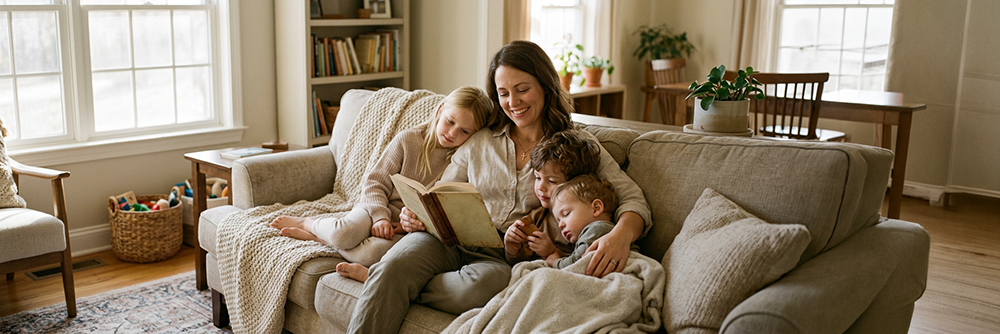
There’s always one more thing to do.
One more lesson to prepare. One more load of laundry. One more meal to plan. One more question to answer. One more thing around the house that needs attention.
For homeschooling moms, the line between school, home, and family life can be hard to find. And when everything happens under the same roof, it can feel as though the work is never quite finished.
We make sure our children get enough sleep. We encourage them to take breaks, spend time outdoors, and develop healthy habits. We teach them the importance of balancing responsibilities with time to recharge.
But how often do we give ourselves that same permission?
Rest can feel elusive, maybe even self-indulgent. With to-do lists stretching longer than our days, taking time to slow down can bring feelings of guilt. If we stop, will everything fall apart? Are we neglecting our responsibilities? Are we setting the right example for our children?
In our hustle-driven culture, rest is often mistaken for laziness or weakness. We can find ourselves confusing busyness with fruitfulness, running on empty, and missing the joy God intended for our journey.
But what if rest isn't something we have to earn? What if it's not a reward for finishing everything on our lists, but part of God's good design for our lives?
Rest Is Part of God's Design
From the very beginning, God established rhythms of work and rest. Rest isn't an afterthought in Scripture; it's woven into the fabric of creation.
Creation itself reflects these rhythms—in the rising and setting of the sun, the changing seasons, and the ways animals and plants alternate between activity and renewal.
As Eryn Lynum, master naturalist, second-generation homeschool mom, and author of Rooted in Wonder and The Nature of Rest, explains, God designed us to rest so that we can function well in life.
One of the most beautiful insights about Sabbath is found in the meaning of the Hebrew word Shabbat, which can mean both to stop and to delight. After creating everything from nothing, God rested. He paused to enjoy His work.
But there's another detail worth considering: Adam was created on the sixth day, which means his first full human day was the seventh day—a day devoted to rest.
God worked and then rested, but we were always meant to begin from rest. Rather than working endlessly in hopes of eventually earning a break, we can learn to work from a place of rest, allowing it to fuel the work we do.
Scripture also shows us that rest is an important part of God's redemptive plan. When God first instructed the Israelites to observe the Sabbath in Exodus 16, it was an act of trust. Ceasing from productivity was risky, but God promised to provide.
Even Jesus modeled this rhythm. Although His ministry was demanding, He regularly withdrew from the noise and activity to spend time in a quiet place. In Mark 6, He invited His disciples to, "Come away by yourselves to a quiet place and rest a while."
If Jesus made time to step away and rest, shouldn't we?
Rest isn't simply a physical necessity. It's an opportunity to step away from our responsibilities, recognize our dependence on God, and trust that everything doesn't rest on our shoulders.
And it's an important lesson for our children, too.
Explore God's Design for Sleep, Rest, and Sabbath Together
How can we help our children understand the importance of rest—not just as something they need when they're tired, but as part of God's intentional design for His creation?
Schoolhouse Rocked, in partnership with Liberty HealthShare, has created a new free resource to help families explore these ideas together:
Restful Rhythms: God’s Design for Sleep, Rest & Sabbath
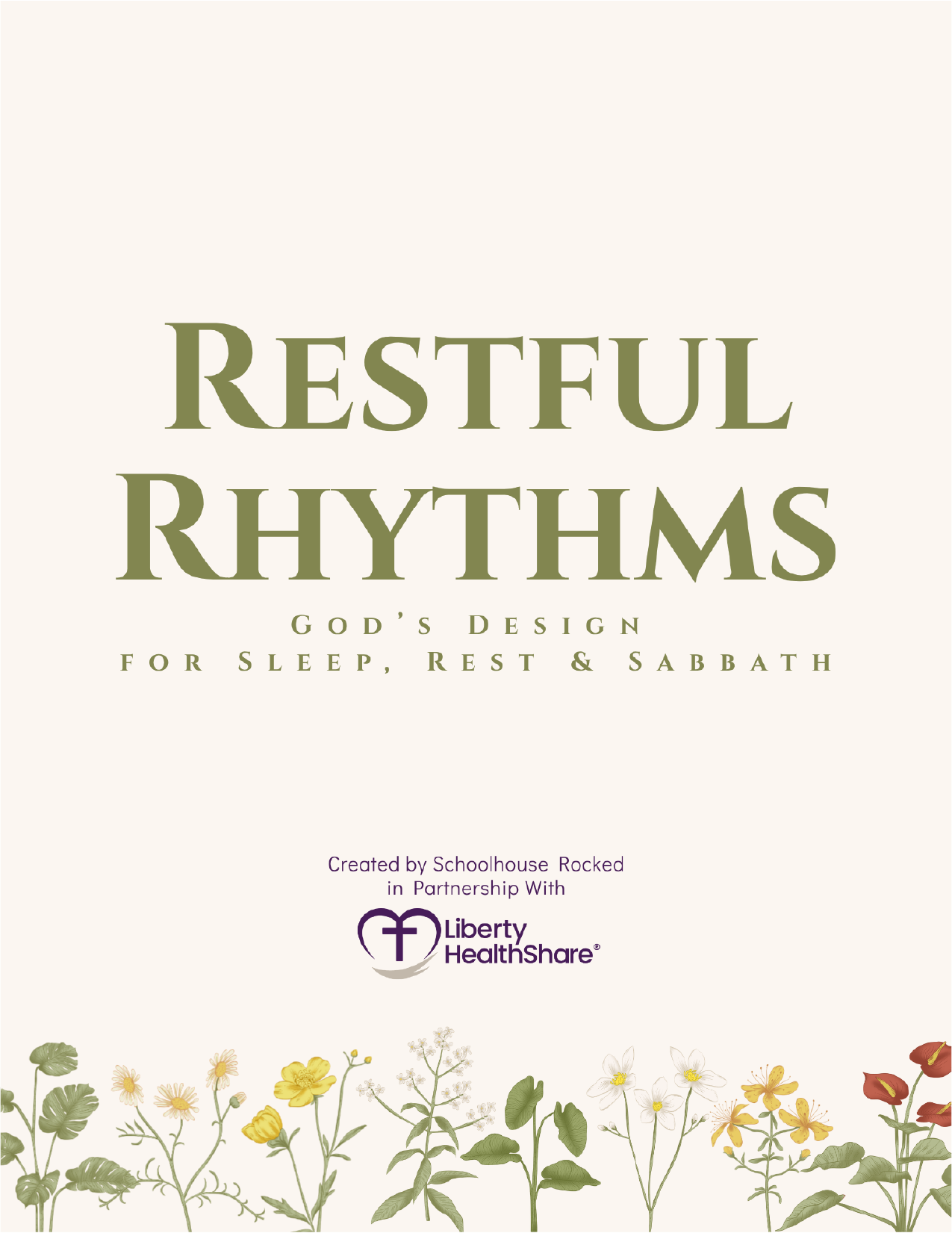
Help your family discover God’s good design for sleep, rest, and Sabbath!
In a world filled with screens, busy schedules, and constant demands, it can be difficult to slow down and make room for rest. This free unit study helps Christian homeschool families explore why rest matters, how God designed our bodies for sleep, and what Scripture and creation teach us about healthy rhythms of work and rest.
Combining science, nature study, and biblical truth, Restful Rhythms: God’s Design for Sleep, Rest & Sabbath guides your family through the science of sleep, animals that rest, God’s pattern of work and rest, the meaning of Sabbath, and practical ways to create more margin in everyday life.
Inside this free unit study, you’ll find:
The Science of Sleep: Explore circadian rhythms, healthy sleep habits, and why growing children need adequate sleep.
Rest in Creation: Discover how animals and plants follow God-designed patterns of activity and rest.
Biblical Teaching: Study Scripture passages about work, rest, Sabbath, and trusting God.
Activities for Multiple Ages: Engage elementary students with drawing, observation, copywork, and simple activities, while middle-school students dig deeper through research and reflection.
Practical Family Resources: Use a sleep-and-energy chart, a time-tracking worksheet, and a family rest challenge to put what you learn into practice.
With activities for both younger and older students, this printer-friendly resource makes it easy to learn together while allowing children to explore topics at their own level.
Help your family move beyond constant busyness and discover restful rhythms rooted in God’s design. Download your free copy and begin exploring how sleep, rest, and Sabbath can help your family grow in wisdom, gratitude, and trust in the Lord.
Created by Schoolhouse Rocked in partnership with Liberty HealthShare, and based on our conversation with Eryn Lynum on the Schoolhouse Rocked Podcast, “Restful Rhythms: How Creation Teaches Us to Pause and Trust God.” Watch or listen here, and get Eryn’s excellent book, The Nature of Rest here.
Liberty HealthShare® is one of the nation’s oldest and largest healthcare sharing ministries. The nonprofit is a caring community of health-conscious individuals and families who choose to support one another and share Christian values of stewardship to help make healthcare affordable. It serves thousands of homeschooling families across the country. Learn more at LibertyHealthShare.org.
This homeschool unit study explores the science of sleep, the rhythms of rest found throughout God's creation, and the biblical foundations of Sabbath. With activities for both elementary and middle-school students, it helps families learn together and discover practical ways to build healthier rhythms into everyday life.
As we teach our children about sleep, rest, and the rhythms God established, we have an opportunity to examine our own habits, too. After all, we can't expect our children to embrace a healthy balance of work and rest if they never see us practicing it.
What Nature Teaches Us About Rest
As a master naturalist, Eryn brings the marvels of the outdoors into this conversation, showing how the rhythms of plants and animals reflect God's wisdom.
Consider the perennial plant. After a season of growth and blossoms, these plants begin to shrivel as winter approaches. They may appear lifeless, but beneath the surface, something important is happening.
During their dormant season, they conserve their energy and focus on their roots. When spring arrives, little green shoots begin to emerge. By the end of the next growing season, those same plants can be bigger, stronger, and bursting with blossoms.
The secret to their longevity is seasonal rest.
The lesson for our families is just as important. Rest isn't wasted time, and a season of slowing down doesn't mean we're falling behind. Sometimes, growth happens beneath the surface, in ways we can't immediately see.
Eryn also describes rest as "the perfection of motion." Rather than simply stopping all activity, true rest brings work and rest back into the harmony God intended. She points to the hummingbird, whose incredible activity is sustained by intentional periods of restorative torpor.
It's a reminder that a healthy rhythm of rest doesn't mean we never work or accomplish anything. It means recognizing that both activity and renewal have an important place in the way God designed us to thrive.
Teaching Our Children to Find Restful Places
Nature also offers beautiful examples of how we can guide our children toward rest.
Eryn shares the example of bighorn sheep in Colorado. Mama sheep guide their babies across steep cliffsides to find places where they can rest safely, away from predators.
As homeschool parents, we have a similar privilege. We guide our children through the rocky ravine of our culture and society, helping them navigate the dangers and distractions around them. We can lead them toward restful places where they can abide in the presence of God.
Children learn a great deal by watching how we live.
When they see us making time for rest, enjoying an unhurried afternoon, putting away our phones, or simply sitting together without a schedule to follow, they're learning something no textbook can teach.
They're learning that being productive isn't the measure of a person's worth. They're learning that caring for the bodies God has given us includes knowing when to stop. And they're learning that rest and responsibility aren't opposites. Both have a place in a healthy, balanced life.
Yet children naturally understand rhythms of activity and rest. As Eryn observes, they come into the world already knowing when to be active and when to rest. Sometimes, as parents, we unintentionally work that natural rhythm out of them.
We have an opportunity to be the example of rest, showing our children what it looks like to trust God's design.
Rediscovering the Joy of Rest with Eryn Lynum
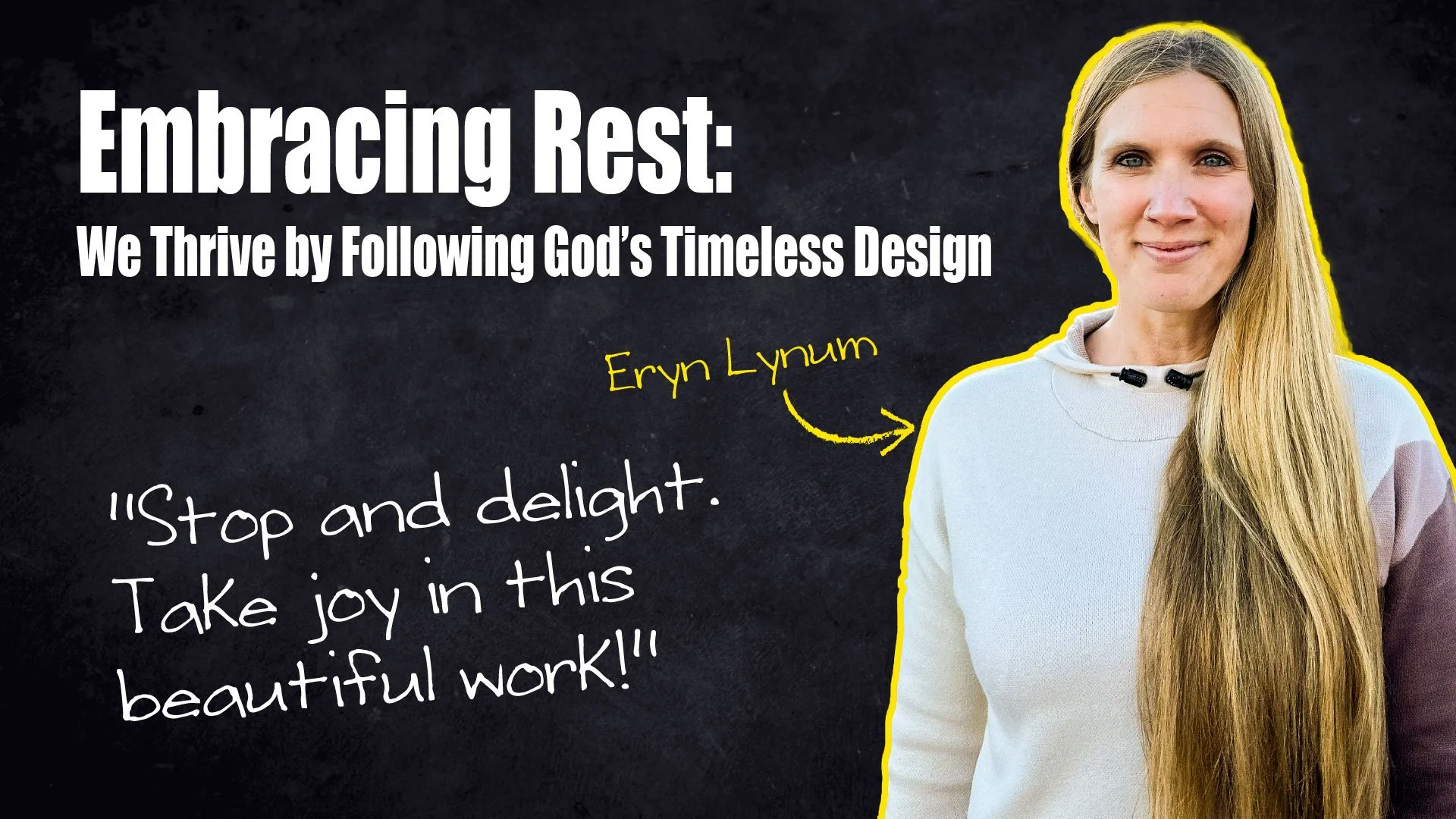
What does it actually look like to embrace rest in the middle of a busy homeschooling life?
In their Schoolhouse Rocked Podcast conversation, host Aby Rinella sats down with Eryn Lynum to explore the biblical foundations of rest, the lessons creation teaches us, and the importance of building rhythms of renewal into our homes.
Their conversation offers a fresh perspective on why rest matters and how we can begin making room for it—even when life feels especially full.
Eryn shares honestly about her own doubts as a homeschooling mom of four and business owner. When her family considered setting aside a full day each week for Sabbath, she wondered how it could possibly work. Would everything fall apart if they stepped away from their responsibilities?
But their family's decision to practice weekly Sabbath brought unexpected blessings, including greater fruitfulness, more creativity, and a deeper sense of joy and satisfaction.
One of the most important lessons from their conversation is that rest is an act of faith. It requires us to trust God rather than believing everything depends on our productivity.
Eryn also reminds us that God's provision of rest isn't limited to one day of the week. His restful presence and His Holy Spirit are always with us. As we make room for rest, He provides peace, perspective, and wisdom.
If you've ever wondered how to slow down without feeling guilty, or how to make rest a more intentional part of your family's life, this conversation is full of biblical encouragement and practical wisdom.
Simple Ways to Make Room for Rest
Embracing rest doesn't mean you have to overhaul your entire schedule overnight. Sometimes, a healthier rhythm begins with a few small changes.
Here are some practical ideas to help you make room for rest in your home:
1. Make a Stop List and a Delight List.
Think about what you need to deliberately set aside and what genuinely helps you recharge.
Your Stop List might include notifications, laundry, errands, or other responsibilities that can wait. Your Delight List might include family board games, baking, reading, gardening, or spending time in nature.
Remember, rest looks different for everyone. For some, it might mean taking a walk or working in the garden. For others, it might mean reading in a hammock or simply being quiet before the Lord.
The important thing is to recognize when something that began as a restful activity starts feeling like another obligation. When gardening becomes work and labor, for example, it may be time to set it aside and read a book instead.
2. Build margin into your schedule.
If you know an activity or lesson will take 30 minutes, block out an hour. Giving yourself extra time creates breathing room and helps prevent one activity from running straight into the next.
Leave room for spontaneity and stillness. Don't let every nature walk, lesson, or family activity become another item to check off a list.
3. Be intentional about technology and information.
Our constant access to information can make it difficult to slow down. Consider what you're allowing into your mind and home.
Choose wisely which emails you subscribe to, which platforms you use, who you follow, and what news and media you allow into your home. Sometimes, finding rest begins with filtering out unnecessary distractions.
4. Practice the power of pause.
Build small moments of Selah—intentional pauses—into your day.
One simple practice Eryn recommends is reflecting on Psalm 23. Slowly reciting the words, "I shall not want," and continuing through the psalm can take only a few minutes, yet it gives you an opportunity to slow down and return your thoughts to truth.
You can also step outside, breathe deeply, enjoy God's creation, or simply be still before the Lord.
5. Start with a small window of time.
If setting aside an entire day feels overwhelming, begin with four hours one afternoon. Put away your phone, set aside the responsibilities that can wait, and make room for rest and delight.
Sometimes, creating a healthier rhythm can be as simple as an earlier bedtime, a quiet family walk, a little less screen time in the evening, or choosing not to fill every available hour.
You don't have to get everything right. Start small and learn to trust God's design.
Dare to Rest
Homeschool mom, you need rest, too.
You don't have to finish everything to deserve it. Your value isn't measured by how many lessons you've completed, how much laundry you've folded, or how many items you've crossed off your to-do list.
Rest is an act of faith—a rejection of hustle and self-sufficiency and a reminder that our lives are sustained by God, not by our own endless efforts.
As Eryn encourages us, take a risk on rest. God's design works, and He will bless your efforts, even when they're messy.
That doesn't mean every day will be peaceful or every week will include a perfectly planned Sabbath. Homeschool families know better than most that life rarely follows the schedule we've made.
But we can begin by making room for rest, trusting God's provision, and teaching our children through our example.
Let's reclaim rest as the gift God intended it to be—not a luxury, not an afterthought, and certainly not something we have to earn.
As we learn to work from a place of rest rather than constantly striving to reach it, we may discover more peace, greater joy, and a deeper appreciation for the beautiful life God has given us.
Recommended Resources:

This blog post and the Restful Rhythms: God’s Design for Sleep, Rest & Sabbath unit study were created in partnership with Liberty HealthShare, one of the nation’s oldest and largest healthcare sharing ministries. The non-profit is a caring community of health-conscious individuals and families who choose to support one another and agree to the Christian values of stewardship to make healthcare affordable for all. It serves thousands of homeschooling families across the country.
