The Teen Years Don’t Have to Be Terrifying!
10 Ways to Build a Stronger Relationship With Your Kids

Discover how to keep communication open, extend grace, and help your teens grow in faith and independence.
Have you ever heard someone say, “Just wait until they’re teenagers”? Maybe you’ve even caught yourself wondering how your sweet little ones will change as they grow into preteens and teens. The truth is, these years can bring their share of challenges—but they can also bring deeper conversations, unexpected laughter, growing independence, and a whole new kind of joy!
As our children mature, our relationships with them need to mature, too. We’re still their parents, teachers, and guides, but we’re also learning to coach them toward adulthood while keeping the door open for honest conversations, even when those conversations catch us off guard.

The good news? We don’t have to navigate these years perfectly. With prayer, patience, and a willingness to grow alongside our children, we can build relationships that last a lifetime.
Need Some Encouragement for the Teen Years?
On the latest episode of the Schoolhouse Rocked Podcast, host Cindy West talks with Alicia Hutchinson about nurturing strong relationships with middle and high schoolers. From staying calm when your kids surprise you to knowing when to step back and let them learn from their mistakes, this conversation is full of practical wisdom and grace-filled encouragement for the journey ahead.
10 Ways to Parent Your Preteens and Teens With More Peace and Purpose
1. Embrace the Teen Years With Joy
Don’t let the warnings about adolescence rob you of the joy that’s ahead! Your relationship with your children will change as they grow, but that change can bring new opportunities for friendship, meaningful conversations, shared interests, and laughter. Instead of bracing for the worst, look forward to discovering who your children are becoming.
2. Remember That Your Child Is a Whole Person
Your preteen or teen is more than a student, a list of responsibilities, or a collection of behaviors to correct. They have their own thoughts, feelings, interests, and questions. Listen carefully, take their concerns seriously, and respect their growing maturity while continuing to provide loving guidance and biblical boundaries.
3. Build Respect Through Relationship
Respect matters, and parents should lovingly establish clear expectations for how family members treat one another. But respect grows best in a home where it is modeled consistently. Speak to your children with the same courtesy and consideration you hope to receive from them. A strong relationship gives correction a foundation of trust.
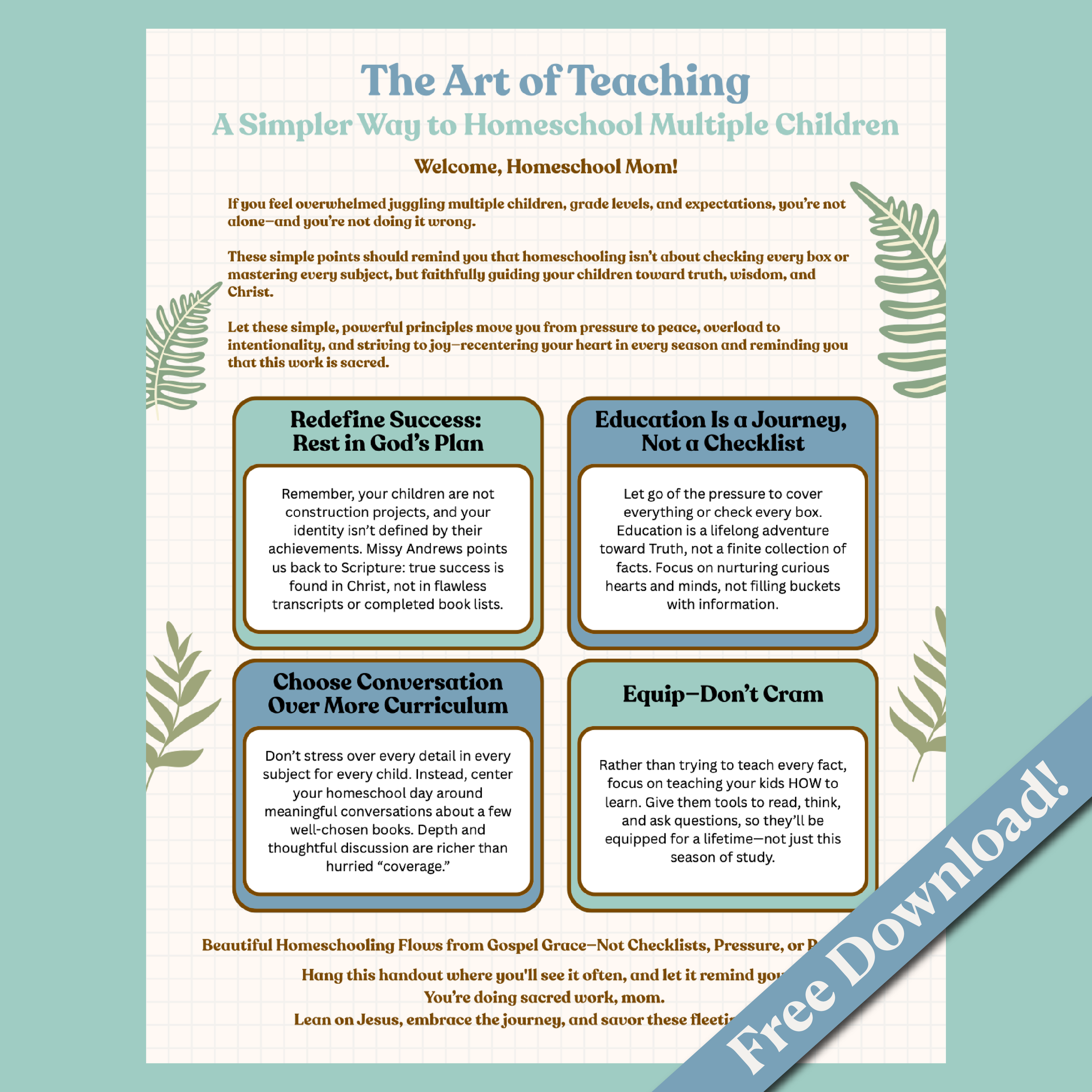
The Art of Teaching is a beautifully simple, encouraging printable designed to help you move from pressure to peace in your homeschool. This guide helps you build a rich, respectful family learning culture—together, even when homeschooling multiple ages and grades.
--- Get Yours Here ---
4. Expect Change, and Don't Be Easily Shaken
Growing bodies, changing emotions, and an increasing desire for independence can make the preteen and teen years feel unpredictable. Remember that your child is learning to navigate new experiences, too. Prepare your heart for some bumps along the way, and try not to interpret every difficult mood or disagreement as a sign that something is terribly wrong.
5. Stay Calm When Conversations Get Uncomfortable
Your children may eventually ask questions or share experiences that surprise, embarrass, or even alarm you. Take a breath before responding! Your first reaction can determine whether they feel safe bringing difficult subjects to you again. You can address serious concerns and uphold your family's convictions without reacting in anger or shutting down communication. Let your children know they can come to you—even when they've made a mistake.
6. Correct With Compassion, and Pray for Your Own Growth
When your teen speaks disrespectfully or makes an unwise choice, correction may be necessary. But before responding, consider your tone and approach. Would you speak that way to a dear friend? Be firm when needed, but avoid humiliating or belittling your child. And don't forget to pray for your own sanctification alongside theirs. God is still working in you, too!
7. Coach More and Control Less
As children grow, they need increasing opportunities to make decisions and take responsibility. Rather than managing every detail, help them think through choices, weigh consequences, and develop practical wisdom. You can offer counsel without always supplying the answer. Gradually shifting from director to coach helps prepare your children for the responsibilities of adulthood.
8. Allow Room for Mistakes and Natural Consequences
It's hard to watch our children struggle, especially when a simple reminder could prevent a problem. But not every mistake needs rescuing. When the stakes are appropriate and safety isn't at risk, allow your teen to experience the consequences of forgetting an assignment, missing a deadline, or failing to follow through. Then be ready to listen, help them reflect, and encourage them to try again. Home can be a safe place to learn lessons that will serve them well beyond it.
9. Model Humility and Be Quick to Apologize
Parents make mistakes, too. We lose our patience, misunderstand a situation, or respond too harshly. When that happens, own it. A sincere apology doesn't undermine your authority; it demonstrates humility, integrity, and a commitment to restoring the relationship. As our children see us seek forgiveness and make things right, we teach them how to do the same.
10. Make Connection a Priority While Encouraging Independence
Your teen may not always seek you out as readily as they once did, but that doesn't mean they no longer need you. Look for natural opportunities to connect—a walk, a special breakfast, a shared project, or a late-night conversation. Pay attention to their friendships and help them think wisely about the people who influence them. Encourage meaningful responsibilities, service, or a first job when appropriate. Give them room to grow while reminding them that your love, guidance, and support are always available.
Above all, keep pointing your children toward Christ. Our goal isn't simply to raise independent adults, but to disciple young men and women who love the Lord, pursue wisdom, and know how to walk in truth and grace. We won't get every moment right, but we can trust God to work in our children—and in us—as we faithfully walk alongside them.


Help Us Encourage More Homeschool Families
The Schoolhouse Rocked Podcast exists to equip and encourage Christian homeschool families with biblical truth, practical wisdom, and reminders that they aren't alone on this journey. Every episode represents time spent researching, recording, producing, and sharing resources to help parents disciple their children and homeschool with confidence.
Would you prayerfully consider making a donation to support the Schoolhouse Rocked Podcast and our ongoing ministry? Your generosity helps us continue producing free encouragement and resources for homeschool families and sharing a Christ-centered vision for education and family life.
Thank you for being part of this ministry and for the faithful work you do in your home. The preteen and teen years may not always be easy, but they are full of opportunities to love deeply, grow in wisdom, and point our children to the Lord. Keep praying, keep connecting, and keep trusting Him with the work He has entrusted to you.
This article was featured in the Schoolhouse Rocked Newsletter.
Subscribe today for weekly homeschooling and parenting encouragement and free resources, like eBooks, unit studies, and homeschooling guides. Plus, get instant stream the feature-length documentary Schoolhouse Rocked: The Homeschool Revolution.
